Rosa is a rose
-
Rosa is a rose, is a rose, is a rose, is a rose. Poets, writers and painters have sung, painted and hailed the rose through the ages. Plant breeders have selected thousands of varieties, so many gaudy ones, in fact, that I have some dislike for them. Give me the single, temporary flowering and scented wild varieties.
Rose petals in Chinese herbalism
-
In Chinese medicine, a lot of use is made of the Rosa rugosa, the wrinkle rose that is now also common in our dunes. Living by the sea myself, I now also tend to use this species a little more. In China, the petals are used to regulate the vital energy 'Qi', to strengthen blood circulation, to treat stomach pain and diarrhea. The high concentration of anthocyanins may possibly explain the effect on blood vessels and intestines. These substances are known for their strengthening effect on the blood vessels and the prevention of clotting platelets. They also have a strong anti-oxidant effect. The tannins could possibly explain the stopping effect in diarrhea or intestinal infections.
Rose water
-
Also on the internet you will find a lot of information about making rose water by soaking petals in water or alcohol; these recipes actually have nothing to do with real rose water. The original rose water is a hydrosol from old scented roses, especially Rosa gallica and Rosa damascena. The rose petals are distilled with steam as is done with most essential oils. In the distillation you actually get 2 products, the distilled water called hydrosol and the fattier, volatile oil that floats on that water. So to make real rose water you need a distiller and a lot of experience. Making good rose water is a real art.
-
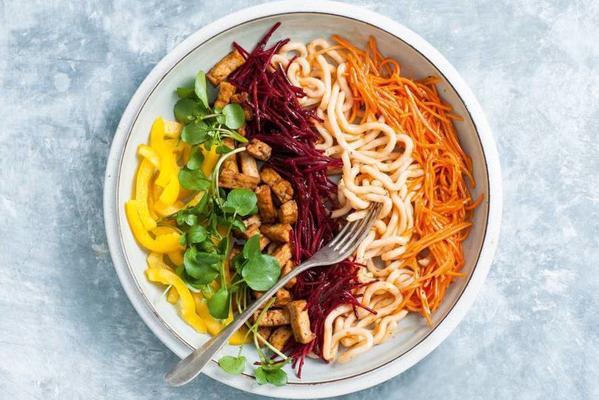 11 minMain dishpeanut oil, tofu stir-fry cubes finely seasoned, stir fry sauce sweet and sour, thick noodles, carrot julienne, beetroot julienne, yellow bell pepper, watercress,rainbow salad with tofu
 -
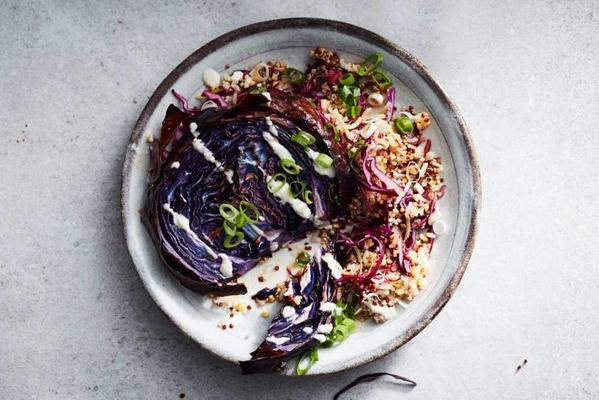 45 minMain dishRed cabbage, mild olive oil, quinoa plus, forest outing, lemon, sesame oil, soy sauce less salt, Bio Today tahini white in pot, tap water,grilled red cabbage with quinoa salad
 -
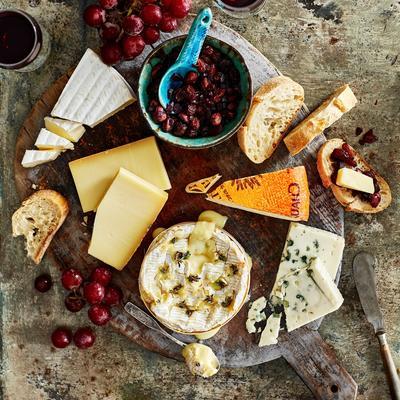 30 minDessertBrie, Roquefort, port salut, gruyere, Camembert, walnut, garlic, thyme, honey, grape, baguette, Red onion, red grape, raisins, Red wine, Red wine vinegar, Brown sugar,generous cheese plate with onion marmalade
 -
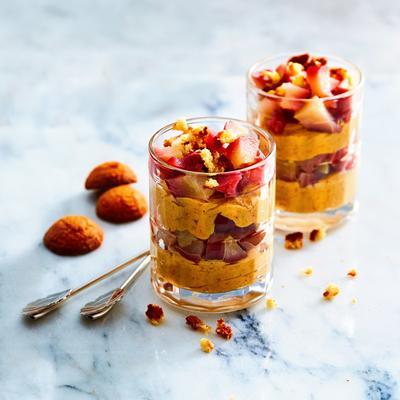 30 minDessertFull Milk, whipped cream, macaroon, custard powder, vanilla sugar, sugar, protein, amaretto, almond liqueur, basic recipe cooking pears,macaroon pastry with casserole
Rose jelly or syrup
-
A very simple rose syrup can be made by sprinkling a layer of petals of the wrinkle rose alternately with sugar in a glass jar at room temperature for about 1 week and then straining. You then get a very aromatic, though rather liquid syrup, which has a slightly disinfecting and astringent effect and is therefore effective against sore throats and hoarseness. But of course it can also be used as a treat on pancakes or in desserts.
Scientific research rose petals
-
Akhmadieva AK, Zaichkina SI, Ruzieva RK, Ganassi EE. 1993. [!The protective action of a natural preparation of anthocyanin (pelargonidin-3,5-diglucoside)]. Radiobiologies. 1993 May-Jun; 33 (3): 433-5. Russian. Trovato A, Monforte MT, Forestieri AM, Pizzimenti F. 2000. In vitro anti-mycotic activity of some medicinal plants containing flavonoids. Boll Chim Farm. 2000 Sep-Oct; 139 (5): 225-7. Shiota S, Shimizu M, Mizusima T, Ito H, Hatano T, Yoshida T, Tsuchiya T. 2000. Restoration of effectiveness of beta-lactams on methicillin-resistant Staphylococcus aureus by tellimagrandin I from rose ed. FEMS Microbiol Lett. 2000 Apr 15; 185 (2): 135-8.A In the French Drôme real rose water is still distilled by Claire Montesinos. We usually visit this craft company on our herbal internships.