Savory: health benefits of ingredients of savory
-
Savory (Satureja) is a genus from the lip flower family. There is summer savory or annual savory (Satureja hortensis) and winter savory or mountain savory (Satureja montana). The taste of both varieties hardly differs from each other. Annual savory is, as the name implies, an annual plant with richly branched stems that are woody in the lower part. Mountain savory, on the other hand, is a perennial native to the Mediterranean and Balkans, where it grows on dry and rocky slopes, at altitudes up to 1,500 meters. Both types of savory can be used as a culinary herb and also have a healing, healing effect.
Origin and occurrence
-
Savory comes from the Mediterranean and was found there in Roman times along with other herbs such as thyme and oregano
Classification
-
Savory belongs to the lavender family (Lamiaceae) or rather, to the botanical subfamily Nepetoideae. Savory is related to other, mostly Mediterranean herbs, such as sage, rosemary
-
 11 minMain dishpeanut oil, tofu stir-fry cubes finely seasoned, stir fry sauce sweet and sour, thick noodles, carrot julienne, beetroot julienne, yellow bell pepper, watercress,rainbow salad with tofu
 -
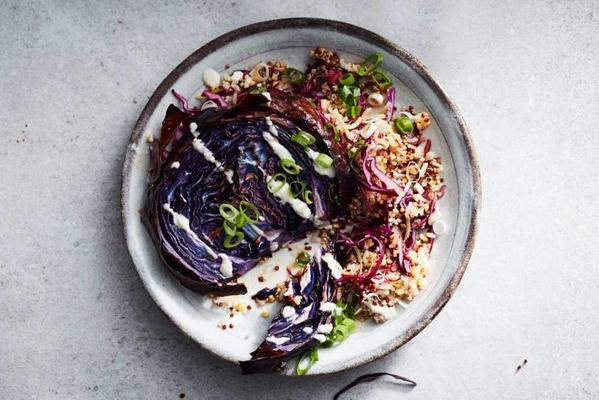 45 minMain dishRed cabbage, mild olive oil, quinoa plus, forest outing, lemon, sesame oil, soy sauce less salt, Bio Today tahini white in pot, tap water,grilled red cabbage with quinoa salad
 -
 30 minDessertBrie, Roquefort, port salut, gruyere, Camembert, walnut, garlic, thyme, honey, grape, baguette, Red onion, red grape, raisins, Red wine, Red wine vinegar, Brown sugar,generous cheese plate with onion marmalade
 -
 30 minDessertFull Milk, whipped cream, macaroon, custard powder, vanilla sugar, sugar, protein, amaretto, almond liqueur, basic recipe cooking pears,macaroon pastry with casserole
Health Benefits of Savory
-
Even in the Middle Ages, savory was a well-known medicinal herb, mainly used to season meals or in general for dyspepsia / indigestion. Savory was often prepared as a tea or with honey water. Savory was also used to treat headaches
-
Even in the Middle Ages, summer savory was a well-known medicinal herb, mainly used for seasoning meals or in general for dyspepsia / indigestion. Savory was often prepared as a tea or with honey water. Savory was also used to treat headaches