The healing power of Devil's Claw
-
Devil's claw has a medicinal tuber and comes from the Kalahari desert garden in Namibia, South Africa, Angola, Zambia and Botswana. Devil's claw also grows in Zimbabwe, but it is a different, less active species. The root has a bitter taste and is used by the local population of the Kalahari desert as an analgesic medicine for menstruation, rheumatism, head, birth pains and afterwe pain.
Naming Devil's Claw
-
In Latin, the devil's claw is called Harpagophytum Procumbens. Harpa comes from the Greek 'Harpagos' which means barb. The fruits are barbed so that they can stick to the fur of animals; that's how the plant spreads. Phytum comes from phyton, which is the Greek word for 'plant'. Procombens means' lying down 'or bending over'. This second part of the official botanical name is a reference to the way the devil's claw is grown. The word 'devil's claw' has to do with the barbs of the fruit. In Dutch, the tuber has a few secondary names: devil's burdock, harpy tree, root of the Windhoek, bitter root of Namibia and wool spider. Windhoek is the capital of Namibia, where the carrot is mainly found. In Namibia, the local population speaks Afrikaans, a sister language of Dutch
Devil's claw in history
-
The Bushmen of the Kalahari Desert used the turnip of devil's claw for various purposes. It was mainly a pain reliever for head, menstrual, nerve, rheumatism, nawe pain and pain during childbirth. In addition, it has an antipyretic effect. It is a bittering agent that stimulates the bile, liver and pancreas in their operation. It was used externally against ulcers and skin injuries. Germany's history has few colonies, but in the 20th century, Germany saw an opportunity to colonize Namibia. Settlers came into contact with the devil's claw, and then the creeper was scientifically investigated in Germany. The German physician O.H. Volk introduced it in 1953 as a medicine for arthritis, diuretic, metabolic disorders and bile, bladder or liver disease. In 1958 German research showed that it has anti-inflammatory properties. Today devil's claw is a much sought after product on the alternative medicine market in Europe. It's in Africa
-
 11 minMain dishpeanut oil, tofu stir-fry cubes finely seasoned, stir fry sauce sweet and sour, thick noodles, carrot julienne, beetroot julienne, yellow bell pepper, watercress,rainbow salad with tofu
 -
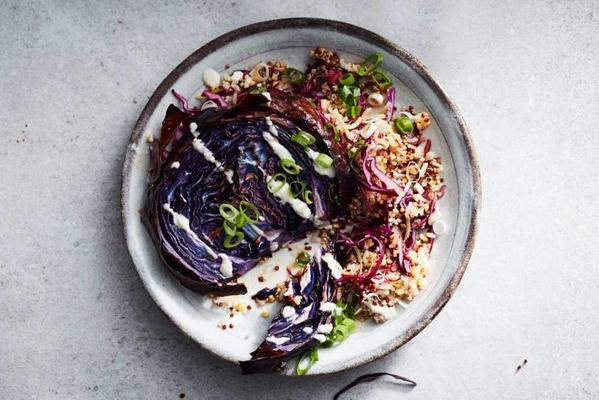 45 minMain dishRed cabbage, mild olive oil, quinoa plus, forest outing, lemon, sesame oil, soy sauce less salt, Bio Today tahini white in pot, tap water,grilled red cabbage with quinoa salad
 -
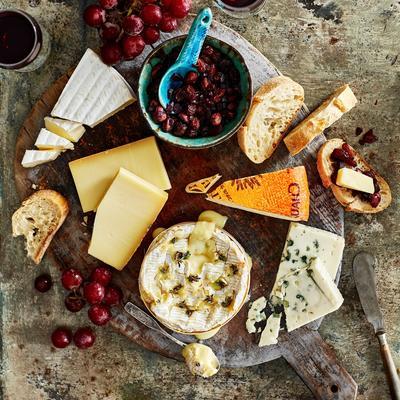 30 minDessertBrie, Roquefort, port salut, gruyere, Camembert, walnut, garlic, thyme, honey, grape, baguette, Red onion, red grape, raisins, Red wine, Red wine vinegar, Brown sugar,generous cheese plate with onion marmalade
 -
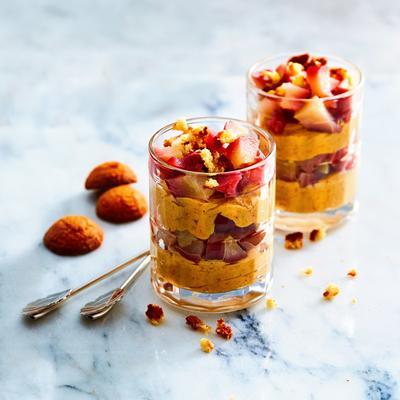 30 minDessertFull Milk, whipped cream, macaroon, custard powder, vanilla sugar, sugar, protein, amaretto, almond liqueur, basic recipe cooking pears,macaroon pastry with casserole
Active ingredients devil's claw
-
Devil's claw contains many iridoid bitters, iridoid glycosides and harpagosides. It contains various flavonoids including luteolin, kaemferol, kaempferide and fisetin. It also contains pentacyclic triterpenes, phenolic glycosides, coffee acids such as chlorogenic and cinnamic acids, phytosterols, monosaccharides, disaccharides, disaccharides, trisaccharides and tetrasaccharides, glucokinin, amino acids, gum resin, N-alkanes and essential oil. In terms of minerals, it contains: calcium, cobalt, chromium, manganese, magnesium, iron, phosphorus, sodium, potassium, selenium, silicon, zinc
Consult the herbalist
-
Anyone who wants to use devil's claw as a medicinal product is recommended to take a consultation with a phytotherapist. Devil's claw extracts and medicines in the form of mother tinctures, powders, nebulisate, liquid extract and capsules should only be taken on prescription by authorized persons. A doctor or herbalist can inform you about this, as well as about any side effects and interactions with other medicines or herbs. All medicinal effects of this medicinal herb mentioned in this article are based on scientific research and come from Geert Verhelst's Large Handbook of Medicinal Plants, a standard work in the field of healing plants. The book is used in herbal medicine.
-
Anyone who wants to use devil's claw as a medicinal product is recommended to take a consultation with a phytotherapist. Devil's claw extracts and medicines in the form of mother tinctures, powders, nebulisate, liquid extract and capsules should only be taken with the prescription of authorized persons. A doctor or herbalist can inform you about this, as well as about any side effects and interactions with other medicines or herbs. All medicinal effects of this medicinal herb mentioned in this article are based on scientific research and come from Geert Verhelst's Large Handbook of Medicinal Plants, a standard work in the field of healing plants. The book is used in herbal medicine.