The healing power of Salsify
-
Black salsify have the shape of an extra long asparagus but with a black skin. They come from a biennial plant that produces yellow flowers in the second year. These flowers can be eaten just like the leaves. The taproot is sold and eaten as a vegetable. This has been happening since the 16th century, but in the second half of the last century, eating this vegetable fell into disuse. Today, at the beginning of the 21st century, the great salsify is undergoing a revival. He is again regularly at the greengrocer and at vegetable stalls on the market. The salsify originates from the Mediterranean.
Contents:
-
Salsify naming History salsify Traditional medicine Nutritional value of salsify Salsify for diabetes For iron deficiency and anemia Good for digestion Good for the bones and muscles
Naming salsify
-
The Latin name for salsify is Scorzonera hispanica. Scorzo nera means 'Black skin' in Italian. Its official name is big salsify. The vegetable was probably first eaten in Spain (hence the Latin addition 'hispanica) and only later in Italy, after which the vegetable conquered further Europe. Scorzonera has been corrupted in Dutch to salsify. Dutch has the nicknames Keukenmeidenverdriet, Huisvrouwenleed, winter asparagus, poor asparagus and winter rod. The nicknames that end in sorrow and suffering are because the peeling involves the release of a sticky juice or latex that makes the hands very dirty. The nicknames with 'winter' refer to the fact that this vegetable is mainly sold in winter. In terms of shape, it looks a bit like an asparagus, hence the name. There are different races such as the 'Long Jan' and 'Improved giants no-shooters'. In English, the plant is called serpent root or viper's herb in addition to black salsify. That's because the Italian word for adder is 'scorzone', which is similar to scorzonera. The adder also has a black skin, so it makes sense for people to link the two almost eponymous things. Both Italian words for adder and salsify have the same origin. In addition, salsify used to be used for adder bites.
-
 11 minMain dishpeanut oil, tofu stir-fry cubes finely seasoned, stir fry sauce sweet and sour, thick noodles, carrot julienne, beetroot julienne, yellow bell pepper, watercress,rainbow salad with tofu
 -
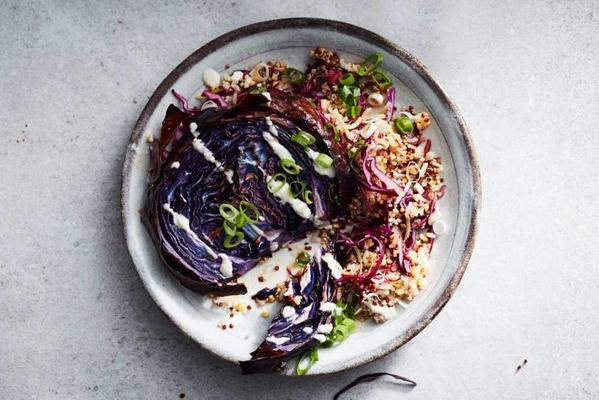 45 minMain dishRed cabbage, mild olive oil, quinoa plus, forest outing, lemon, sesame oil, soy sauce less salt, Bio Today tahini white in pot, tap water,grilled red cabbage with quinoa salad
 -
 30 minDessertBrie, Roquefort, port salut, gruyere, Camembert, walnut, garlic, thyme, honey, grape, baguette, Red onion, red grape, raisins, Red wine, Red wine vinegar, Brown sugar,generous cheese plate with onion marmalade
 -
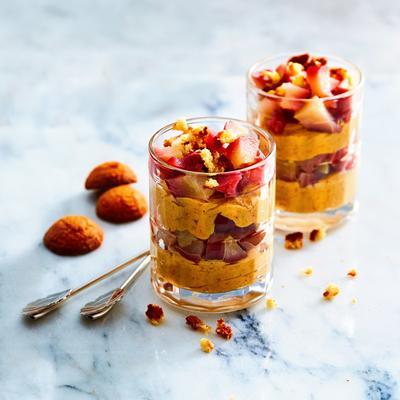 30 minDessertFull Milk, whipped cream, macaroon, custard powder, vanilla sugar, sugar, protein, amaretto, almond liqueur, basic recipe cooking pears,macaroon pastry with casserole
History of salsify
-
The salsify does not enter our country in the Netherlands until the 16th century, from Spain and Italy. In the Mediterranean, this vegetable has been eaten for some time. It is thought that the Celts brought the vegetable into Europe, but the vegetable can also come from Spain via Berbers (Barbarians). One of the first Westerners to see salsify was the writer Leonhard Rudeolf; he saw it lying in a market in Syria.
Traditional medicine
-
In traditional medicine the salsify was used for bubonic plague and snake bites. The bubonic plague is caused by fleas infected with bacteria and can kill you after four days. This vegetable was probably used in snake bites because it resembles a snake and according to the signature theory it would therefore be a medicine. There are indeed anti-inflammatory substances in salsify, according to modern scientific research. The fact that salsify was used in bubonic plague and snake bites is thus supported by scientific knowledge.
Nutritional value salsify
-
Salsify contain a lot of thiamine or vitamin B1: 100 grams contain 9% of the Recommended Daily Allowance (RDA). Furthermore, there is a lot of folic acid or vitamin B11, called vitamin B9 in Belgium, in: 8% of the RDA. In addition, it appears to contain 6% of the RDA of vitamin C. There are higher RDA percentages for minerals in this vegetable: iron (18% RDA), potassium (10% RDA), phosphorus (9% RDA), copper (6% RDA) and calcium (4% RDA). Other percentages for vitamins and minerals are 3% of the RDA or lower. Furthermore, there is asparagine, choline and laevulin as phytonutrients in this vegetable. The glucoside also contains inulin, a fiber.
-
 5 minDrink without alcoholbananas, cool fresh apple-pear raspberry juice, Soy drink vanilla,soy fruit shake
 -
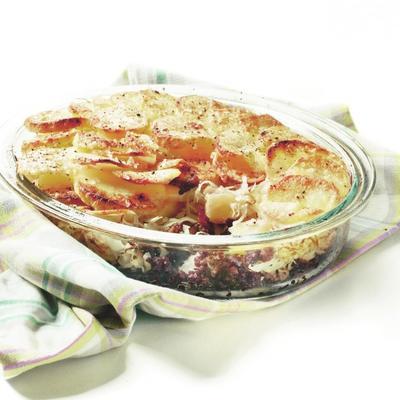 20 minMain dishsauerkraut, sticking potato, liquid baking product, half-to-half minced, Spice meatballs, pineapple, olive oil, liquid baking product,gratin sauerkraut dish with minced meat
 -
 40 minMain dishlemongrass, fresh ginger, Red peppers, onions, tomato cubes, fresh cod fillet, coriander, oil, ground turmeric (koenjit), coconut milk, salt,fish in creamy coconut sauce
 -
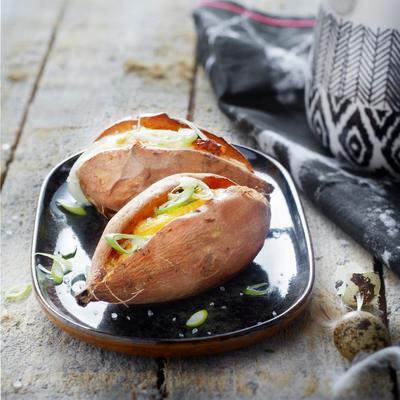 15 minSide dishsweet potato, soft goat cheese, egg, spring / forest onion,stuffed sweet potato with egg
Salsify in case of diabetes
-
Because salsify contains inulin, it is a vegetable that is suitable for people with diabetes or diabetes mellitus. This fiber retains sugars longer, so that sugar is more evenly released into the blood. As a result, the blood sugar level will show fewer peaks and troughs. Inulin also stimulates the growth of bifidobacteria in the intestines, which improves the absorption of minerals. More important for diabetics is that the bifidobacteria stabilize the blood sugar level. In addition to salsify, purple morning star, dandelion root, yacon, burdock and Jerusalem artichokes are important sources of inulin.
Iron deficiency and anemia
-
Because there are many minerals, especially iron in salsify, you can eat this vegetable to prevent fatigue, anemia and mineral deficiency in general. The inulin provides additional stimulation to absorb minerals from food. If you combine the consumption of salsify with other iron-containing products such as parsley, it is difficult to get iron deficiency. Furthermore, there is the mineral copper in the large salsify. This is an important mineral that, among other things, prevents premature graying.
Good for digestion
-
Thiamine is good for the nervous system and muscles. Thiamine helps to produce enzymes that can break down proteins into useful substances for the body. Thiamine helps in the production of stomach acid. These important functions of thiamine make it an indispensable vitamin. Digestive problems can be solved or improved if we use more Flower salsify / Source: H. Zell, Wikimedia Commons (CC BY-SA-3.0)
-
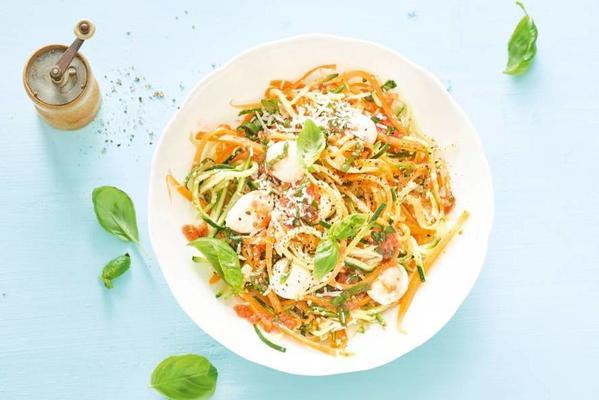 20 minMain dishTasty vine tomato, (olive oil, fresh basil, onion, garlic, Parmigiano Reggiano, zucchini spaghetti, pumpkin spaghetti, mini buffalo mozzarella,lukewarm pumpkin and zucchini spaghetti
 -
 15 minSide dishtraditional olive oil, curry powder, wheat flour, coconut milk, sambal oelek, chicken broth tablet, water, fresh mango,curry sauce with mango
 -
 30 minMain dishtraditional olive oil, lean ground beef, frozen Mexican wok vegetables, salsa sauce mild, taco shell, grated young cheese, creme fraiche,Mexican vegetable in tacos
 -
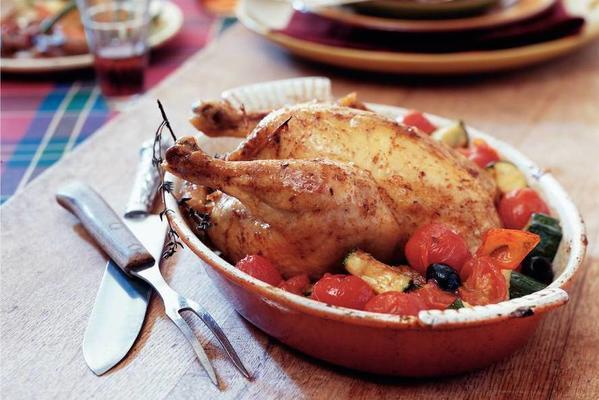 95 minMain dishmaize chicken, lemon, coarse sea salt, pepper, extra virgin olive oil, garlic, thyme, zucchini, tomatoes (small to), black olives without pit,provençal chicken with zucchini and tomatoes
Good for the bones and muscles
-
Potassium is good for the muscles and bones. The heart is a large muscle, so the heart also benefits from consuming enough potassium. For the bones not only calcium is needed, but calcium works together with other minerals such as potassium, magnesium and phosphorus. An excess of calcium can even cause the body to decide to get rid of calcium and weaken the large storehouse of calcium, the bones. That is one of the reasons that milk, especially milk added with calcium, is not very healthy at all. Fortunately, salsify have calcium and other minerals in good proportions.