The ideal meal salad
-
A meal salad is easy and delicious. It is therefore no wonder that the range of ready-to-eat salads in the supermarket is so wide. In addition, the salad has a healthy image. But are ready-to-eat salads really as healthy as the name suggests? And how do you make an ideal meal salad yourself?
Criteria for main courses
-
To be able to judge whether those handy ready-to-eat salads from the supermarket are healthy, it is first good to know what a healthy meal looks like. In the Netherlands, the Nutrition Center has set a number of criteria for main courses. The dishes that meet these criteria are part of the Wheel of Five. This means that these dishes contribute to good health and that you should be allowed to eat them daily. The dishes that do not meet these criteria do not fit into the Wheel of Five. You can eat these dishes, but preferably not too often. The criteria set by the Nutrition Center for main courses: Energy 400 to 700 kilocalories (kcal) Vegetable minimum 150 grams Potatoes / grain products potato (products) without salt or whole grain cereal products (such as wholemeal pasta) without salt Meat (substitutes) maximum 100 grams of meat, fish, egg, vegetarian product or 25 grams of nuts or minimum 60 grams of legumes Fat a maximum of 15 grams of liquid margarine, liquid baking and roasting, or oil salt maximum 2 grams (800 mg sodium) Optionally, the dish may contain a maximum of two choices from the 'daily category' of products outside the Wheel of Five. These are products that are not included in the Wheel of Five, but that do not contain too much kcal, salt and saturated (= wrong) fat. Examples include pickles and olives.
-
To be able to judge whether those handy ready-to-eat salads from the supermarket are healthy, it is first good to know what a healthy meal looks like. In the Netherlands, the Nutrition Center has set a number of criteria for main courses. The dishes that meet these criteria are part of the Wheel of Five. This means that these dishes contribute to good health and that you should be allowed to eat them daily. The dishes that do not meet these criteria do not fit into the Wheel of Five. You can eat these dishes, but preferably not too often. The criteria set by the Nutrition Center for main courses: Energy 400 to 700 kilocalories (kcal) Vegetable minimum 150 grams Potatoes / grain products potato (products) without salt or whole grain cereal products (such as wholemeal pasta) without salt Meat (substitutes) maximum 100 grams of meat, fish, egg, vegetarian product or 25 grams of nuts or minimum 60 grams of legumes Fat maximum 15 grams of liquid margarine, liquid frying and roasting, or oil salt maximum 2 grams (800 mg sodium) Optionally, the dish may contain a maximum of two choices from the 'daily category' of products outside the Wheel of Five. These are products that are not included in the Wheel of Five, but that do not contain too much kcal, salt and saturated (= wrong) fat. Examples include pickles and olives.
Consumentenbond Research
-
In 2013, the Consumers' Association conducted research into ready-to-eat salads from large supermarkets in the Netherlands. In particular, they looked at the two most popular salads: six goat cheese salads and six Caesar salads. These salads contain an average of 650 kcal. Anyone who goes into the supermarket themselves and picks eighteen random meal salads from the shelves, averages 560 kcal. Based on this, ready-to-eat salads therefore contain sufficient kcal. The ingredients of ready-to-eat salads are more concerning. Although the salads seem to be a source of vegetables, in reality this is disappointing (less than 150 grams). In addition, other ingredients and additives (such as: cheese, white grain products and dressings) ensure that ready-to-eat salads often contain a lot of sugar and salt. One meal salad was found to contain twice as much salt than the salt criterion of two grams. This deserves attention, because about 85 percent of all Dutch people already consume too much salt every day.
-
In 2013, the Consumers' Association conducted research into ready-to-eat salads from large supermarkets in the Netherlands. In particular, they looked at the two most popular salads: six goat cheese salads and six Caesar salads. These salads contain an average of 650 kcal. Anyone who dives into the supermarket themselves and picks eighteen random meal salads from the shelves comes to an average of 560 kcal. Based on this, ready-to-eat salads therefore contain sufficient kcal. The ingredients of ready-to-eat salads are more concerning. Although the salads seem to be a source of vegetables, this is actually disappointing (less than 150 grams). In addition, other ingredients and additives (such as: cheese, white grain products and dressings) ensure that ready-to-eat salads often contain a lot of sugar and salt. One meal salad was found to contain twice as much salt than the salt criterion of two grams. This deserves attention, because about 85 percent of all Dutch people already consume too much salt every day.
-
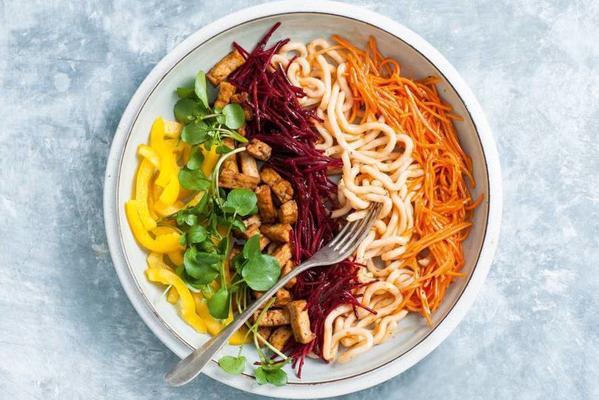 11 minMain dishpeanut oil, tofu stir-fry cubes finely seasoned, stir fry sauce sweet and sour, thick noodles, carrot julienne, beetroot julienne, yellow bell pepper, watercress,rainbow salad with tofu
 -
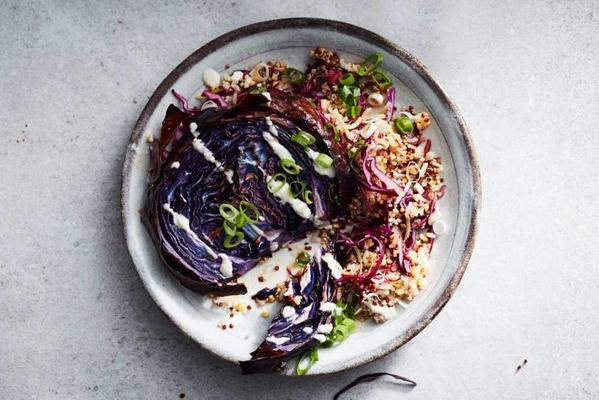 45 minMain dishRed cabbage, mild olive oil, quinoa plus, forest outing, lemon, sesame oil, soy sauce less salt, Bio Today tahini white in pot, tap water,grilled red cabbage with quinoa salad
 -
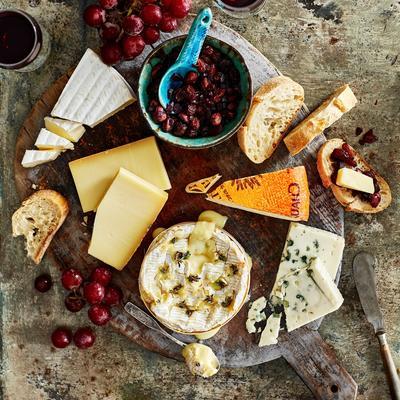 30 minDessertBrie, Roquefort, port salut, gruyere, Camembert, walnut, garlic, thyme, honey, grape, baguette, Red onion, red grape, raisins, Red wine, Red wine vinegar, Brown sugar,generous cheese plate with onion marmalade
 -
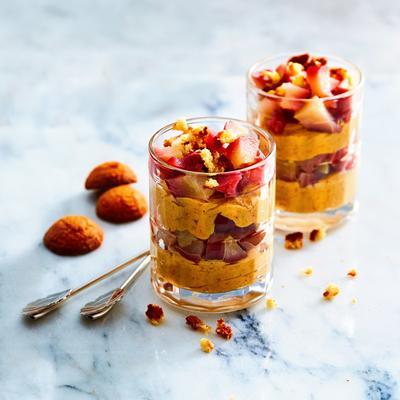 30 minDessertFull Milk, whipped cream, macaroon, custard powder, vanilla sugar, sugar, protein, amaretto, almond liqueur, basic recipe cooking pears,macaroon pastry with casserole
The ideal meal salad
-
It is now clear that ready-to-eat meal salads are somewhat falling off their pedestal. So make your own, but how do you make an ideal meal salad? That's how you do it!
Step 1: Leafy vegetables
-
Start at the beginning: leafy greens. Think for example of iceberg lettuce, arugula or mixed lettuce. But spinach, endive and cabbage (such as kale) are also good options. All unprocessed, fresh vegetables and frozen vegetables are suitable. You can buy loose lettuce leaves or kale leaves, as well as a bag. One bag of (mixed) lettuce of 100 grams is sufficient for 2 to 3 people.
-
Start at the beginning: leafy greens. Think, for example, of iceberg lettuce, arugula or mixed lettuce. But spinach, endive and cabbage (such as kale) are also good options. All unprocessed, fresh vegetables and frozen vegetables are suitable. You can buy single lettuce or kale leaves, as well as a bag. One bag of (mixed) lettuce of 100 grams is sufficient for 2 to 3 people.
Step 2: Extra fruits and vegetables
-
The leafy vegetables can be supplemented with other vegetables. After all, we have not yet collected at least 150 grams of vegetables per person in this dish. Good examples are: (pointed) bell pepper, (cherry) tomato, cucumber, red onion, broccoli, celery and (grated) carrot. Weigh the quantities (once) so that you gain insight into the quantities. For example, one raw, cleaned pepper weighs eighty grams. And five cherry tomatoes weigh fifty grams. Be careful with avocados. These are healthy, but contain a lot of kcal. You can also add some fruit (such as a few pieces of apple, cranberries or raisins) if you like.
-
The leafy vegetables can be supplemented with other vegetables. After all, we have not yet collected at least 150 grams of vegetables per person in this dish. Good examples are: (pointed) bell pepper, (cherry) tomato, cucumber, red onion, broccoli, celery and (grated) carrot. Weigh the quantities (once), so that you gain insight into the quantities. For example, one raw, cleaned pepper weighs eighty grams. And five cherry tomatoes weigh fifty grams. Be careful with avocados. These are healthy, but contain a lot of kcal. You can also add some fruit (such as a few pieces of apple, cranberries or raisins) if you like.
-
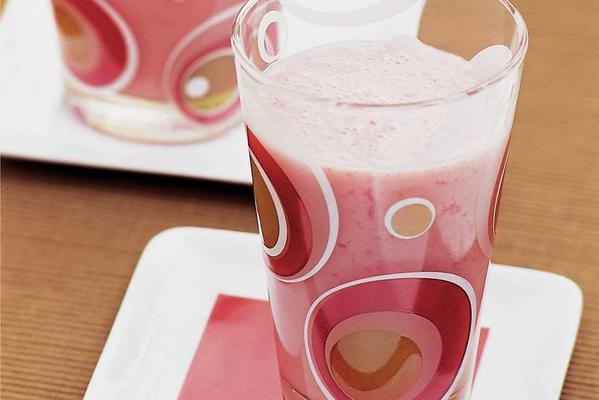 5 minDrink without alcoholbananas, cool fresh apple-pear raspberry juice, Soy drink vanilla,soy fruit shake
 -
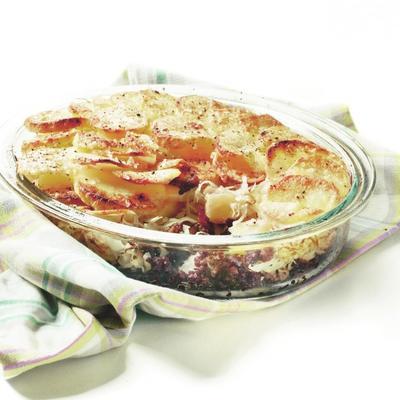 20 minMain dishsauerkraut, sticking potato, liquid baking product, half-to-half minced, Spice meatballs, pineapple, olive oil, liquid baking product,gratin sauerkraut dish with minced meat
 -
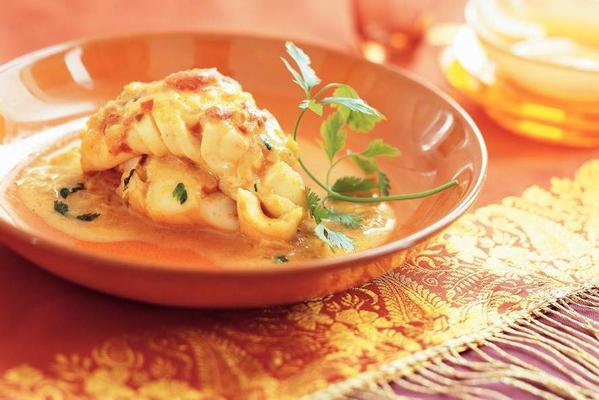 40 minMain dishlemongrass, fresh ginger, Red peppers, onions, tomato cubes, fresh cod fillet, coriander, oil, ground turmeric (koenjit), coconut milk, salt,fish in creamy coconut sauce
 -
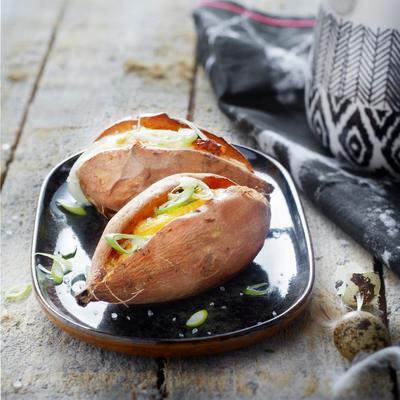 15 minSide dishsweet potato, soft goat cheese, egg, spring / forest onion,stuffed sweet potato with egg
Step 3: Potatoes / grain products
-
Just like you would otherwise do with dinner, you can now also have potatoes (calculate 200-250 grams uncooked potatoes), wholemeal pasta (75-100 grams; uncooked), brown rice (100 grams; uncooked) or wholemeal couscous, wholemeal bulgur or wholemeal quinoa (75 grams; uncooked). Do you eat the meal salad for lunch? You can also make croutons from whole wheat sandwiches.
-
Just as you would otherwise do with dinner, you can now also have potatoes (calculate 200-250 grams uncooked potatoes), whole wheat pasta (75-100 grams; uncooked), brown rice (100 grams; uncooked) or wholemeal couscous, wholemeal bulgur or wholemeal quinoa (75 grams; uncooked). Do you eat the meal salad for lunch? You can also make croutons from whole wheat sandwiches.
Step 4: Meat substitutes
-
Then add a protein rich product, such as: meat, chicken, fish, egg, legumes, tofu or nuts. Use a maximum of 100 grams of meat, fish, egg, vegetarian product, a maximum of 25 grams of unsalted nuts, or a minimum of 60 grams (= 1 serving spoon) legumes. The average Dutch person eats few legumes. Take up the challenge and use, for example, lentils, kidney beans or chickpeas.
Step 5: Dressing Finish the salad with a tasty dressing and topping if desired. There are supermarkets where vegetable based dressings without sugar are available. You can also make your own dressing, such as: a vinaigrette, vinegar dressing, low-fat yogurt dressing or pesto dressing (with homemade pesto). Do not use more than one tablespoon of oil per person. If the salad needs to stay fresh for a longer period of time, you can add the dressing at the last minute. Finally, add some kernels, seeds, herbs, pickles or olives, for example. Preferably no salt. Sources: Nutrition center. Disk of Five. Nutrition center. Potatoes. Nutrition center. Pasta. Nutrition center. Rice. Nutrition center. Couscous. Nutrition center. What is a healthy lunch? Roggeveen L. (2013). Consumentenbond: 'Meal salad contains a lot of calories and few vegetables'. Nutrition Now. Van Hooijdonk A. (2018). Salads are often less healthy than you think. AD. (2016). Two sandwiches and a meal salad: too much salt? NOS Â A A Don't miss anything anymore?
-
]
-
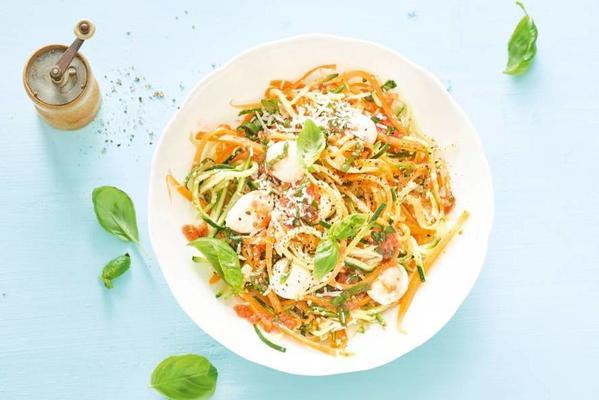 20 minMain dishTasty vine tomato, (olive oil, fresh basil, onion, garlic, Parmigiano Reggiano, zucchini spaghetti, pumpkin spaghetti, mini buffalo mozzarella,lukewarm pumpkin and zucchini spaghetti
 -
 15 minSide dishtraditional olive oil, curry powder, wheat flour, coconut milk, sambal oelek, chicken broth tablet, water, fresh mango,curry sauce with mango
 -
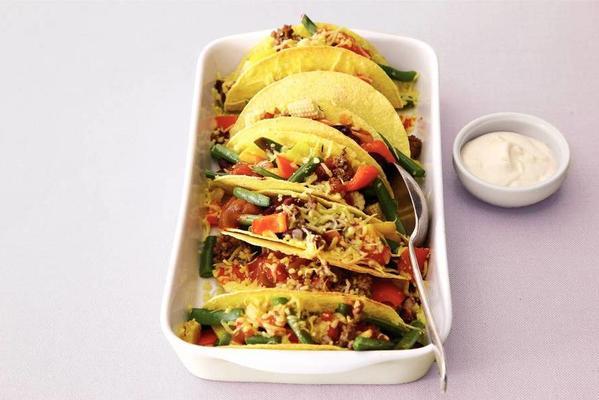 30 minMain dishtraditional olive oil, lean ground beef, frozen Mexican wok vegetables, salsa sauce mild, taco shell, grated young cheese, creme fraiche,Mexican vegetable in tacos
 -
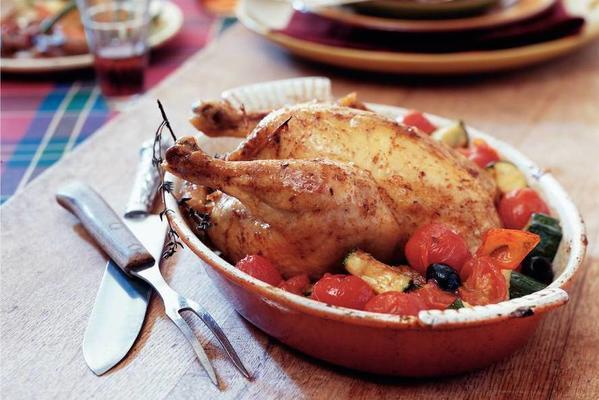 95 minMain dishmaize chicken, lemon, coarse sea salt, pepper, extra virgin olive oil, garlic, thyme, zucchini, tomatoes (small to), black olives without pit,provençal chicken with zucchini and tomatoes
Don't miss anything anymore?
-
]